1. Overview & Statutory Background
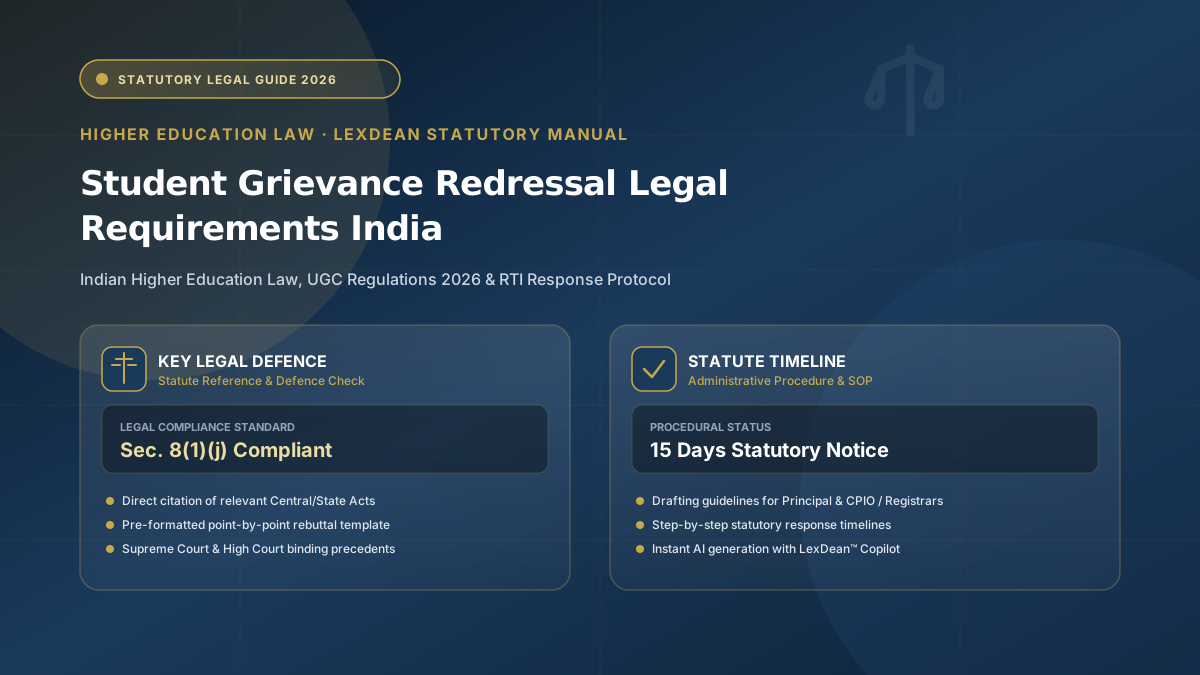
In the current regulatory landscape of 2026, the University Grants Commission (Redressal of Grievances of Students) Regulations serve as the bedrock for institutional accountability. For Principals and Registrars, a grievance is not merely an administrative nuisance; it is a legal trigger that can escalate into litigation or NAAC accreditation penalties if handled improperly. The legal risk arises when colleges fail to maintain a transparent, time-bound mechanism as mandated by the statutory body. When a student files a formal grievance, the college is legally obligated to provide a response that aligns with the principles of natural justice. Failure to adhere to these norms often invites intervention from the Ombudsman or the High Court, leading to unnecessary legal expenditures and reputational damage.
2. Key Legal Provisions & Statutory Framework
The legal framework governing student grievances is multi-layered. Primarily, the UGC Regulations 2026 mandate the establishment of a Students Grievance Redressal Committee (SGRC). This is not optional; it is a prerequisite for continued affiliation and recognition. Furthermore, when dealing with requests for information regarding disciplinary actions or faculty records, colleges must invoke Section 8(1)(j) of the RTI Act 2005. As established in the landmark judgment of Girish Ramchandra Deshpande vs. Central Information Commissioner, personal information of faculty or other students is exempt from disclosure unless there is a larger public interest. Additionally, for cases involving harassment, the POSH Act 2013 (Sexual Harassment of Women at Workplace) overrides general grievance procedures, requiring a specialized Internal Committee (IC) with mandatory external members. Ignoring these specific statutory demarcations is a common path to legal liability.
Facing a Legal Notice or RTI Query in Your College?
LexDean AI generates point-by-point, statute-referenced official replies tailored to Indian Higher Education Law in just 2 minutes.
Free में Reply Draft करो →3. Step-by-Step Response Strategy for College Principals
- Step 1: Immediate Acknowledgment: Issue a formal acknowledgment within 48 hours of receiving the grievance. This stops the 'deemed failure' clock and demonstrates administrative diligence.
- Step 2: Verification of Jurisdiction: Determine if the grievance falls under the SGRC, the Anti-Ragging Committee, or the POSH IC. Misrouting a grievance is a procedural error that can be challenged in court.
- Step 3: Drafting the Statutory Rebuttal: Ensure the response is fact-based, referencing specific college bylaws and UGC clauses. Avoid emotional or defensive language; stick to the record of facts.
- Step 4: Maintenance of the 'Grievance Register': Keep a digitized, timestamped log of all proceedings. NAAC auditors look for this specific documentation to verify compliance with Criterion 5 of the NAAC framework.
Statutory Alert: Non-compliance within the 15-day statutory notification window for SGRC hearings can lead to affiliation penalties and severe remarks from the UGC Ombudsman.
4. Common Drafting Mistakes & How to Avoid Them
The most frequent pitfall for college administration is the lack of specificity in rejection letters. When a grievance is dismissed, the college must provide a 'reasoned order'—a document detailing why the claim lacks merit based on the college’s published statutes. Vague responses like 'application rejected' are legally untenable and provide grounds for a writ petition. Another error is the failure to maintain the confidentiality of the parties involved. Under the Digital Personal Data Protection Act, disclosing sensitive student data during the grievance process without proper authorization can lead to heavy regulatory fines. Always redact PII (Personally Identifiable Information) before sharing records with third-party inquiry committees.
5. Summary: How LexDean AI Automates This Process
LexDean simplifies the complex regulatory burden by providing an AI-driven Compliance Suite. Our system ingests the raw grievance data and, within 2 minutes, generates a legally vetted, statute-compliant response. By integrating the latest UGC 2026 directives and relevant high court precedents, LexDean ensures that every letter signed by your Registrar is backed by ironclad legal logic. We transform your grievance management from a reactive, high-risk activity into a proactive, transparent administrative process that satisfies both the UGC Ombudsman and NAAC assessors.