1. Overview & Statutory Background
Indian colleges, whether government-aided or private institutions receiving substantial funding, frequently fall under the ambit of the Right to Information Act, 2005. As a College Principal or Registrar, receiving an RTI application is a routine administrative event, but handling it requires precision and legal foresight. A poorly drafted reply can expose the institution to unnecessary litigation, CIC (Central Information Commission) summons, or unwarranted scrutiny during NAAC accreditation cycles. The objective of an RTI reply is not to hide information, but to ensure that the college protects privileged, personal, and fiduciary data while complying with the statutory duty of transparency.
2. Key Legal Provisions & Statutory Framework
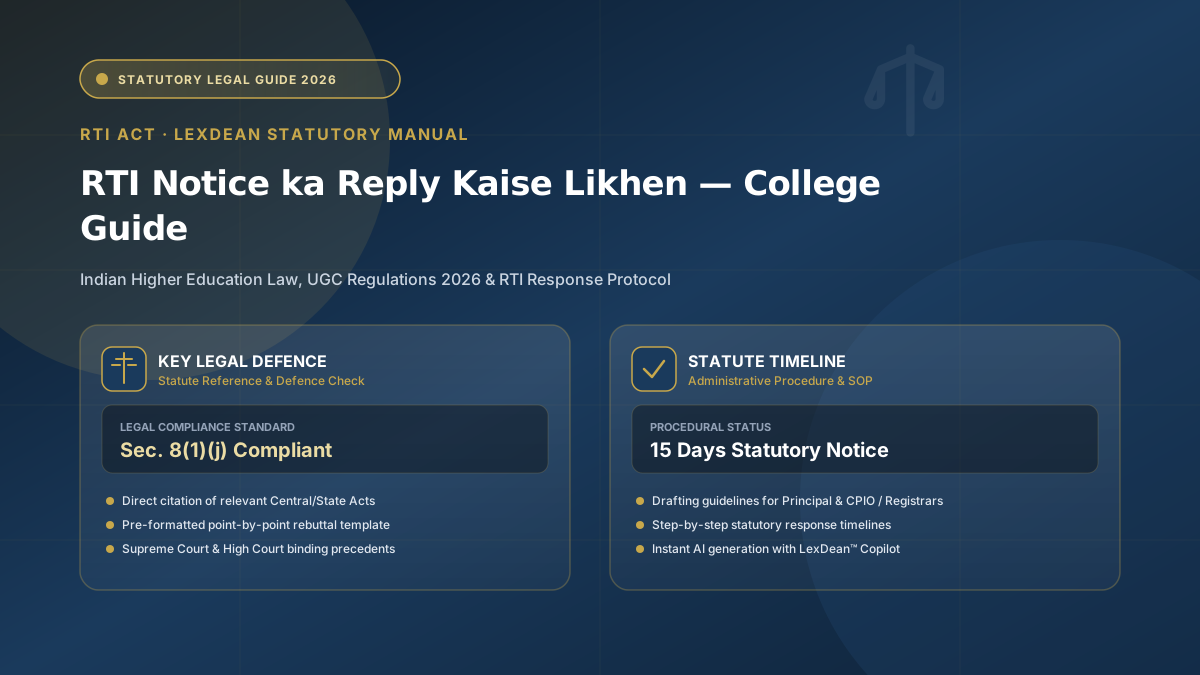
The RTI Act 2005 mandates that public authorities provide information within 30 days. However, colleges often face requests for sensitive faculty records or student data. The primary legal defense for colleges is Section 8(1)(j), which exempts personal information that has no relationship to any public activity or interest. The landmark Supreme Court judgment in Girish Ramchandra Deshpande vs. Central Information Commissioner & Ors serves as the bedrock for this defense, establishing that service records, salary details, and disciplinary proceedings of employees are personal information protected from disclosure unless a larger public interest is proven. Furthermore, UGC Regulations 2026 and AICTE Handbooks emphasize that institutional autonomy must be balanced with statutory disclosure requirements regarding admissions, fees, and faculty qualifications.
Facing a Legal Notice or RTI Query in Your College?
LexDean AI generates point-by-point, statute-referenced official replies tailored to Indian Higher Education Law in just 2 minutes.
Free में Reply Draft करो →3. Step-by-Step Response Strategy for College Principals
- Step 1: Initial Assessment: Determine if the applicant is seeking material information versus opinion or interpretation. The RTI Act mandates providing 'information' as defined under Section 2(f), not responding to 'why' or 'how' questions.
- Step 2: Verification of Public Authority Status: Confirm if your specific college department is legally obligated to respond under the Act. If the college is private and non-aided, the applicability may vary based on state-specific High Court rulings.
- Step 3: Drafting the Statutory Rebuttal: If the information is exempt, cite the specific clause. Use language such as: 'The requested information comprises personal details of employees, which is exempt under
Section 8(1)(j)of theRTI Act 2005, as it serves no larger public interest and constitutes an unwarranted invasion of privacy.' - Step 4: Third-Party Consultation: If the information pertains to a third party (e.g., a student or staff member), you are legally obligated under
Section 11to issue a notice to them before disclosing any data.
Statutory Alert: Non-compliance within the 30-day statutory timeframe (or 15 days for specific notice types) can lead to a penalty of Rs. 250 per day, capped at Rs. 25,000, as per Section 20(1) of the Act.
4. Common Drafting Mistakes & How to Avoid Them
The most common pitfall for administrators is providing incomplete records or over-disclosing sensitive data. Do not provide information that is 'held in confidence' or relates to ongoing POSH Act 2013 investigations, as this may jeopardize legal proceedings. Ensure that your reply is signed by the designated Public Information Officer (PIO). Avoid generic 'we cannot disclose' statements; always append the relevant Section 8 exemption clause to ensure the reply is legally defensible before the Information Commission.
5. Summary: How LexDean AI Automates This Process
Drafting an RTI reply manually is time-consuming and prone to human error. LexDean AI simplifies this by analyzing the RTI query against the latest UGC guidelines and High Court precedents. Our platform instantly generates a draft that protects your college's interests while maintaining full statutory compliance. By leveraging LexDean, Principals and Registrars can ensure their responses are legally airtight, minimizing the risk of second-level appeals and institutional embarrassment. Visit https://lexdean.suktiai.in to automate your legal compliance today.