1. Overview & Statutory Background
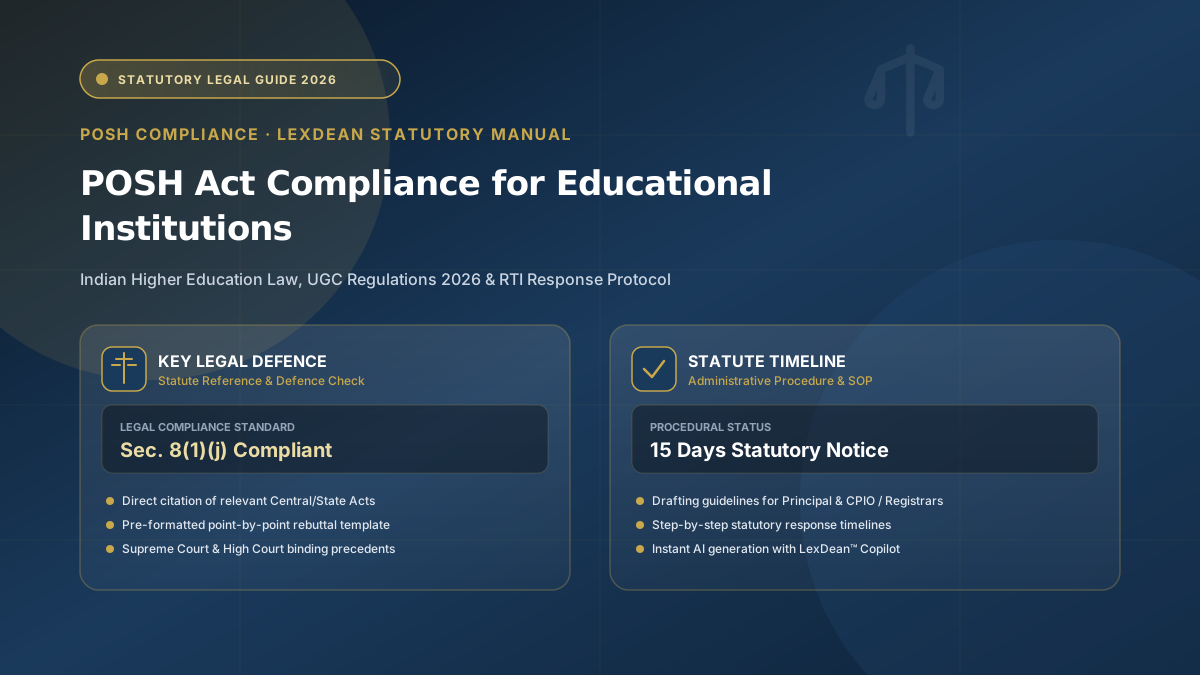
In the landscape of Indian Higher Education, the Sexual Harassment of Women at Workplace (Prevention, Prohibition and Redressal) Act, 2013 (POSH Act) is not merely a policy—it is a foundational statutory requirement. For Principals and Registrars, failure to maintain a fully functional Internal Committee (IC) is a direct violation of UGC (Prevention, Prohibition and Redressal of Sexual Harassment of Women Employees and Students in Higher Educational Institutions) Regulations, 2015 and subsequent 2026 updates. Educational institutions are often targeted by RTI queries and legal notices regarding the constitution of their ICs; therefore, maintaining a precedent-backed compliance posture is essential to avoid affiliation suspension or NAAC accreditation downgrades.
2. Key Legal Provisions & Statutory Framework
The legal framework governing POSH in colleges is multifaceted. Under the POSH Act 2013, every college must constitute an Internal Committee (IC) with a presiding officer who is a senior-level woman employee, at least two employees committed to the cause of women, and one external member from an NGO or an association familiar with the issue of sexual harassment. Furthermore, the Supreme Court judgment in Girish Ramchandra Deshpande v. Central Information Commissioner underscores the importance of balancing transparency with the privacy of the parties involved. When handling sensitive complaints, Registrars must invoke RTI Act 2005 Section 8(1)(j) to protect the personal information of the complainant and the respondent, ensuring that proceedings do not devolve into public trials. The AICTE Handbook further mandates that institutions submit annual compliance reports to the regional office, failing which, the institution risks losing its 'Ease of Doing Business' score in regulatory audits.
Facing a Legal Notice or RTI Query in Your College?
LexDean AI generates point-by-point, statute-referenced official replies tailored to Indian Higher Education Law in just 2 minutes.
Free में Reply Draft करो →3. Step-by-Step Response Strategy for College Principals
- Step 1: IC Constitution Audit: Ensure your Internal Committee is not 'paper-based'. Verify that the external member has a valid appointment letter and is not a close relative of any management member. Verify the 50% gender representation requirement for the committee members.
- Step 2: Documentation of Awareness Programs: The law mandates sensitization workshops. Keep detailed attendance logs, photos, and training materials as evidence. NAAC peer teams specifically look for these records under Criterion 7 (Institutional Values and Best Practices).
- Step 3: Drafting the Statutory Rebuttal: If you receive a legal notice alleging non-compliance, your response must cite the
POSH Act 2013sections under which your institution is compliant. Use formal, non-emotive language that highlights the existence of the IC, the receipt of the complaint, and the adherence to the 90-day inquiry timeline.
Statutory Alert: Non-compliance within statutory timeframes can lead to affiliation penalties and severe litigation risk. Ensure that all internal inquiry reports are kept in a sealed, confidential 'POSH Registry' to prevent unauthorized access.
4. Common Drafting Mistakes & How to Avoid Them
Many administrators make the mistake of using generic 'template' letters that lack specific references to the UGC Regulations 2026. Avoid admitting fault in preliminary correspondence. Ensure that every notice or reply is signed by the Presiding Officer of the IC or the Head of the Institution. A major pitfall is the failure to maintain a 'Non-Disclosure Agreement' (NDA) for committee members, which is essential to protect the college from defamation suits if inquiry details leak. Always cross-reference your internal bylaws with the POSH Act to ensure there is no conflict between institutional policy and central law.
5. Summary: How LexDean AI Automates This Process
LexDean AI transforms the complex burden of legal compliance into a 2-minute administrative task. By inputting the specific details of your institution and the nature of the notice, LexDean generates airtight, precedent-backed replies that align with the latest UGC and AICTE directives. Whether you are preparing for a NAAC inspection or drafting a response to a high-court notice, our AI ensures your institution remains protected, compliant, and legally sound.