1. Overview & Statutory Background
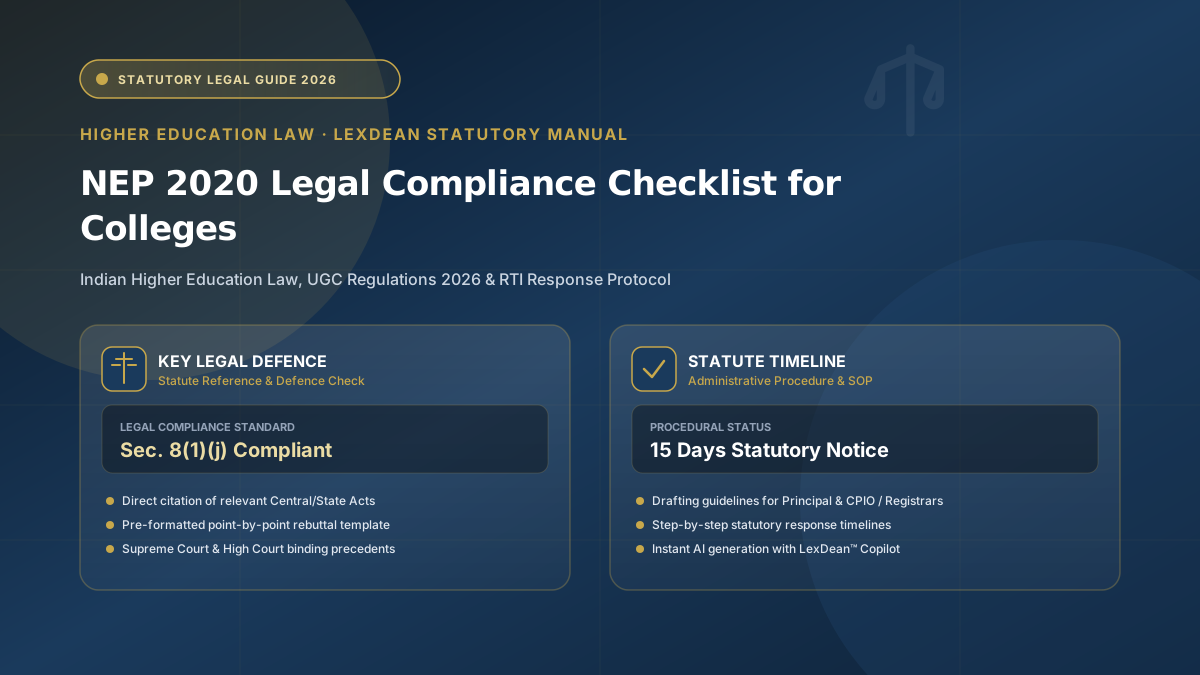
The implementation of the National Education Policy (NEP) 2020 is no longer a policy suggestion; it is a statutory mandate enforced through the UGC (Academic Bank of Credits) Regulations and the AICTE Approval Process Handbook. For Principals and Registrars, the transition to a multidisciplinary structure represents a fundamental shift in institutional liability. Failure to adhere to these norms exposes colleges to de-affiliation risks and loss of NAAC accreditation, as regulatory bodies now prioritize compliance-driven academic autonomy over traditional administrative inertia.
2. Key Legal Provisions & Statutory Framework
Colleges must operate within the strict confines of the UGC Guidelines on Multidisciplinary and Holistic Education. Key legal requirements include the establishment of an Academic Bank of Credits (ABC) cell, compliance with the POSH Act 2013 for campus safety, and adherence to UGC (Prevention of Ragging) Regulations. Furthermore, when managing student data or faculty appraisals, institutions must invoke Section 8(1)(j) of the RTI Act 2005, as upheld by the Supreme Court in Girish Ramchandra Deshpande vs. Central Information Commissioner, to protect the personal privacy of staff while maintaining transparency.
Facing a Legal Notice or RTI Query in Your College?
LexDean AI generates point-by-point, statute-referenced official replies tailored to Indian Higher Education Law in just 2 minutes.
Free में Reply Draft करो →3. Step-by-Step Response Strategy for College Principals
- Step 1: Audit of Academic Regulations: Verify that your college bylaws are updated to reflect the Multiple Entry-Exit System (MEES) as mandated by the
UGC Credit Framework. Ensure that credits are mapped according to theNational Higher Education Qualifications Framework (NHEQF). - Step 2: Statutory Grievance Redressal: Ensure the existence of a functional Student Grievance Redressal Committee (SGRC) as per
UGC (Grievance Redressal) Regulations, 2023. The composition must strictly follow the gazetted notification. - Step 3: Governance Documentation: Maintain a Compliance Register that tracks all UGC circulars and state government notifications. This acts as a primary defense during NAAC Peer Team visits or administrative audits.
Statutory Alert: Non-compliance within statutory timeframes can lead to affiliation penalties and withdrawal of UGC grants under Section 12B of the UGC Act, 1956.
4. Common Drafting Mistakes & How to Avoid Them
Many institutions fail by using outdated statutes in their College Prospectus or Service Rules. Avoid referencing repealed UGC regulations. Always verify the latest amendments via the E-Gazette of India. Ensure that faculty recruitment processes align with the UGC Regulations on Minimum Qualifications for Appointment of Teachers, 2018 (and subsequent amendments). Ambiguity in internal bylaws often leads to litigation in High Courts; ensure that all internal policies are vetted by legal counsel to avoid 'arbitrary action' claims under Article 14 of the Constitution.
5. Summary: How LexDean AI Automates This Process
LexDean simplifies the complex landscape of Indian Education Law by providing AI-driven compliance drafting. Whether it is responding to a UGC show-cause notice, drafting a POSH inquiry report, or updating your institutional bylaws to match NEP 2020 standards, LexDean provides precedent-backed, legally airtight documents in under 2 minutes. Stop relying on manual drafting and start leveraging the power of LexDean’s legal intelligence engine to secure your institution’s future.