1. Overview & Statutory Background
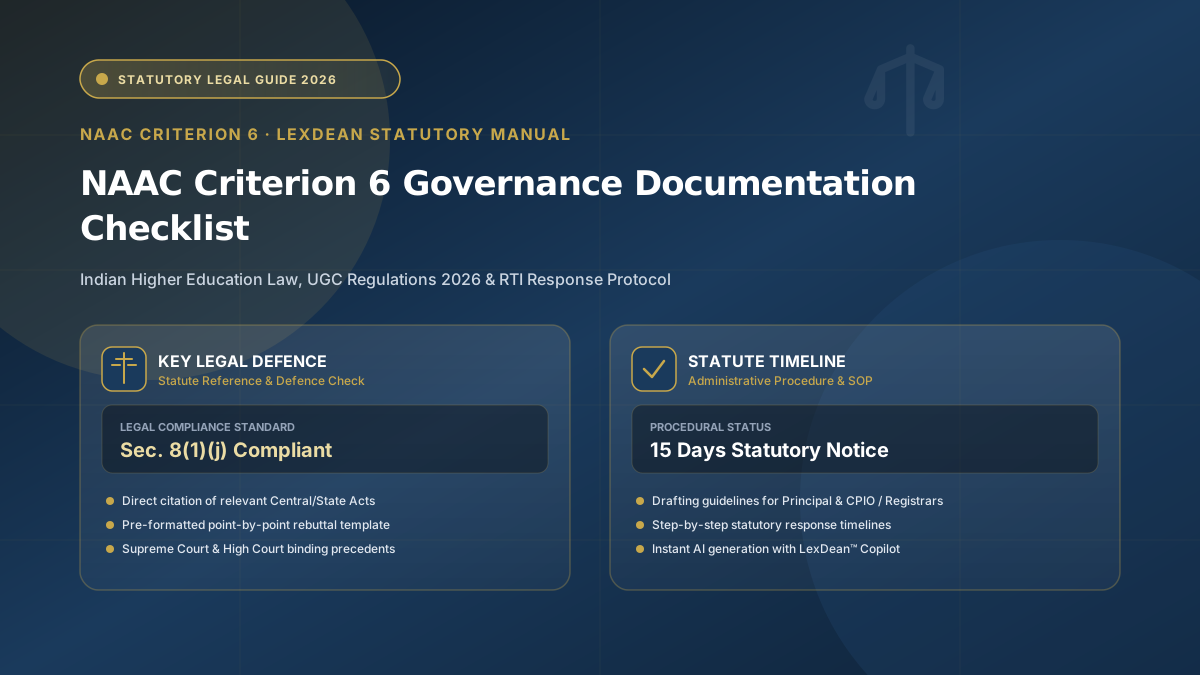
NAAC Criterion 6, titled Governance, Leadership and Management, is the backbone of institutional assessment. For college principals and registrars, this is not merely a data-filling exercise but a legal audit of institutional compliance. Under the UGC (Institutions Deemed to be Universities) Regulations 2026 and the AICTE Approval Process Handbook, your governance documentation serves as the primary evidence of statutory adherence. Failure to maintain these records in a legally defensible format exposes the institution to de-affiliation risks and adverse findings during NAAC Peer Team visits.
2. Key Legal Provisions & Statutory Framework
Governance documentation must be balanced against the Right to Information (RTI) Act 2005. While NAAC requires transparency, Section 8(1)(j) of the RTI Act protects the personal privacy of faculty and staff. When documenting recruitment, promotion, and appraisal records, ensure that sensitive personal data is redacted or handled in line with the Supreme Court ruling in Girish Ramchandra Deshpande v. Central Information Commissioner. Furthermore, ensure that your internal committees, such as the Internal Complaints Committee (ICC), are fully compliant with the POSH Act 2013. Any governance document that lacks evidence of these mandatory statutory committees is considered 'deficient' in the eyes of NAAC assessors.
Facing a Legal Notice or RTI Query in Your College?
LexDean AI generates point-by-point, statute-referenced official replies tailored to Indian Higher Education Law in just 2 minutes.
Free में Reply Draft करो →3. Step-by-Step Response Strategy for College Principals
- Step 1: Institutional Strategic Planning: Ensure that the Perspective Plan for the next 5 years is formally approved by the Governing Body (GB) or Board of Management (BoM). The minutes must be signed and stamped.
- Step 2: Decentralization Evidence: Document the delegation of powers to heads of departments and coordinators. This must be backed by formal office orders and institutional bylaws.
- Step 3: Financial Transparency: Maintain audited balance sheets and internal/external audit reports as mandated by the UGC Finance Rules. Ensure that all financial transactions above the prescribed threshold follow the public procurement norms.
- Step 4: Welfare Schemes Documentation: Keep a register of all faculty welfare measures, including maternity leave, provident fund, and group insurance, ensuring compliance with the Employees' Provident Fund Act 1952.
Statutory Alert: Non-compliance with the UGC 2026 Regulations regarding the constitution of the Governing Body can lead to immediate withholding of NAAC accreditation status and potential legal challenges from regulatory bodies.
4. Common Drafting Mistakes & How to Avoid Them
Many institutions fail because they provide 'generic' documents rather than 'statutory' evidence. Avoid the common pitfall of submitting unsigned 'draft' minutes of meetings. Every document submitted for Criterion 6 must be an 'attested true copy' of the original record maintained in the institutional archive. Furthermore, ensure that the E-governance implementation report includes screenshots of official portals and ERP modules, as per the digital transformation mandates of the Ministry of Education.
5. Summary: How LexDean AI Automates This Process
LexDean AI removes the guesswork from NAAC documentation. By integrating the latest UGC 2026 guidelines and High Court precedents, our platform automatically generates compliant templates for Governing Body minutes, perspective plans, and policy documents. Whether you are drafting a response to a NAAC clarification or preparing your SSR, LexDean ensures that every document is legally airtight, minimizing the risk of audit queries and maximizing your institutional score.