1. Overview & Statutory Background
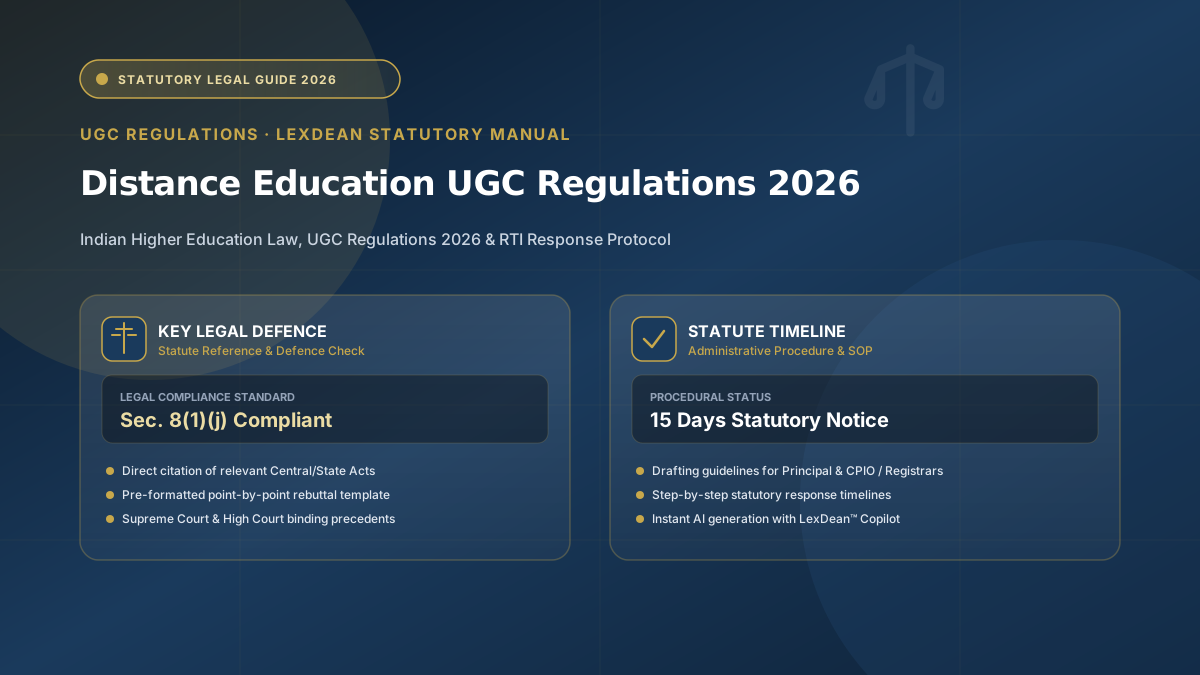
The University Grants Commission (Open and Distance Learning Programmes and Online Programmes) Regulations, 2026 mark a paradigm shift in Indian higher education. As Principals and Registrars, it is crucial to recognize that the UGC has transitioned from a monitoring body to an enforcement agency under the UGC Act, 1956. These regulations mandate that all Distance Education (DE) and Online Learning (OL) programs must align with the National Education Policy (NEP) 2020. The primary objective is the standardization of quality assurance, ensuring that degrees awarded through non-traditional modes hold the same legal validity as regular, on-campus degrees under the UGC (Minimum Standards of Instruction) Regulations.
Colleges often face scrutiny regarding their Learner Support Centres (LSCs). Under the 2026 framework, any deviation from the prescribed faculty-to-student ratio or failure to maintain a robust Learning Management System (LMS) is considered a breach of statutory compliance, leading to the potential suspension of admission cycles. Understanding the legal nexus between these regulations and the POSH Act 2013 is also critical, as digital safety for remote learners is now a mandatory audit requirement for NAAC accreditation.
2. Key Legal Provisions & Statutory Framework
The 2026 Regulations emphasize the principle of Academic Autonomy with Accountability. Colleges must note that the RTI Act 2005, specifically Section 8(1)(j), protects the personal information of students and faculty; however, this does not exempt the institution from disclosing aggregate data regarding enrollment and infrastructure to the UGC. The Girish Ramchandra Deshpande v. CIC judgment reinforces that while personal privacy is paramount, institutional transparency regarding statutory compliance is a non-negotiable public interest.
Furthermore, the regulations mandate that all study material must be vetted by the Board of Studies and uploaded to the Academic Bank of Credits (ABC). Failure to integrate with the ABC portal is now classified as a 'Level 3 Violation,' which invites immediate show-cause notices. Compliance officers must ensure that all advertisements for distance programs are strictly compliant with the UGC (Prevention of Malpractices in Higher Education) Guidelines to avoid misleading the public.
Facing a Legal Notice or RTI Query in Your College?
LexDean AI generates point-by-point, statute-referenced official replies tailored to Indian Higher Education Law in just 2 minutes.
Free में Reply Draft करो →3. Step-by-Step Response Strategy for College Principals
- Step 1: Internal Audit of LSCs: Conduct a quarterly inspection of all Learner Support Centres. Ensure they meet the physical infrastructure requirements prescribed in the 2026 annexures. Documentation is your primary shield during a UGC inspection.
- Step 2: Faculty Verification: Cross-verify faculty credentials against the
AICTE Handbookstandards for online teaching. Ensure every faculty member has undergone the mandatory Digital Pedagogy Certification. - Step 3: Drafting the Statutory Rebuttal: In the event of a deficiency notice, the reply must be drafted with precision. Use formal, legalistic language that cites specific clauses of the 2026 Regulations to refute allegations of non-compliance.
Statutory Alert: Non-compliance within the 15-day statutory response window can lead to the freezing of institutional bank accounts and the withdrawal of affiliation. Always maintain a digital trail of compliance documentation.
4. Common Drafting Mistakes & How to Avoid Them
Many college administrators fall into the trap of using generic, template-based replies when responding to UGC show-cause notices. This is a fatal error. Legal authorities look for specific factual justifications. Avoid vague statements like 'we are in the process of complying.' Instead, cite the exact date of completion, provide evidence of resource allocation, and reference the relevant section of the 2026 Regulations. Additionally, failing to attach a notarized affidavit from the Registrar regarding the authenticity of the data provided is a common procedural lapse that can lead to summary rejection of your representation.
5. Summary: How LexDean AI Automates This Process
LexDean simplifies complex statutory compliance by mapping your college's current data against the 2026 UGC framework. Our AI engine generates airtight, precedent-backed responses in under 2 minutes. Whether you are preparing for a NAAC audit or responding to a regulatory inquiry, LexDean ensures your language is legally robust, professional, and compliant with both the UGC Act and relevant High Court precedents. Stop guessing; start complying with the precision of a legal expert.